
Construction firms are often linked with steel, concrete, and heavy equipment, so copywriting may not seem like an obvious priority. But in a competitive market, the right words can be as important as solid plans and skilled crews when it comes to winning profitable contracts.
Construction companies use persuasive writing at every step to turn technical details into clear, convincing messages. You can learn more about this on https://builtfor.studio/services/content-marketing-and-copywriting/.
Good copy helps decision-makers see the value, trust the firm, and feel confident choosing them. Instead of only listing facts, strong writing sells solutions, reduces worry, and shows proof of past success.
What Is Copywriting in the Context of Construction Firms?
Copywriting is writing that aims to promote a product or service. For construction firms, it means writing content that draws in potential clients, keeps their attention, and encourages them to take action-like requesting a meeting or awarding a project. It’s more than recording project details or listing specs. It presents those details in a way that shows benefits, answers client concerns, and explains why the firm is the right pick for the job. To do this well, the writer needs to understand construction work and how clients make buying decisions.
Construction copywriting covers many formats, from a short website headline to a long tender document for a major project. Strong construction copy takes technical topics-engineering, scheduling, safety planning-and explains them in plain, benefit-focused language that fits the reader, whether that’s a government team, a developer, or a homeowner planning a large build.
How Does Copywriting Differ from Traditional Construction Marketing?
Traditional construction marketing often focuses on project photos, service lists, and simple descriptions of technical skills. Think brochures with numbers and big project images, or ads that highlight size and scale. These tools matter, but they may not push the reader to choose you.
Copywriting has a different goal: to influence a decision. Traditional marketing might say, “We build skyscrapers.” Copywriting would say, “We work with developers to deliver landmark towers with strong structural performance and reliable schedules-so your plan becomes a finished asset without delays.” It moves from “what we do” to “what we do for you,” focusing on outcomes, problem-solving, and what makes the firm different. It’s less like broadcasting and more like speaking directly to the client’s priorities.
Key Components of Effective Construction Copywriting
Construction copywriting works best when it combines industry knowledge with persuasive writing. The main building blocks include:
- Clear, short writing: technical info should be easy to read without losing accuracy.
- Client-first focus: address the client’s goals and worries, not just the firm’s features.
- Benefit-led language: show what the client gains (lower risk, fewer delays, better quality, cost control).
- Professional, engaging tone: confident but not stiff.
- Consistent brand voice: the firm should sound like the same company across website, proposals, and brochures.
- Strong calls to action (CTAs): guide the reader to the next step (book a call, request a quote, download a case study).
Why Does Copywriting Matter for Winning Construction Contracts?
Construction is competitive, and projects can involve large budgets and high risk. Clear, persuasive communication can decide who wins. Copywriting is the firm’s voice before any meeting happens. Without it, even a highly skilled contractor can struggle to explain what makes them the safest and smartest choice-and can blend in with other qualified bidders.
For many clients, the writing they see (website, capability statement, proposal) forms their first impression. Strong copy helps that impression feel professional, confident, and trustworthy. It builds a story around the firm’s strengths that makes sense both logically and emotionally for the people making the final call.

Improves Engagement with Bid Proposals and Tender Documents
Bid proposals and tender documents are often long and technical. If they are hard to read, evaluators may miss key points or forget what makes one firm better than another. Strong copy turns these documents into clear, persuasive arguments.
Good bid writing uses clear headings, clean structure, short summaries, and benefit-focused phrasing to guide the reader. It makes the firm’s advantages easy to spot and understand. This helps the proposal stand out-even if competing firms have similar technical plans.
Builds Trust and Authority with Decision Makers
Trust is central in construction because the stakes are high. Clear, professional writing shows that the firm understands the client and can handle risk. Well-written website content, proposals, and case studies show expertise and care.
This careful approach signals to decision-makers that the firm pays attention to detail in communication and in project delivery. When complex plans are explained in simple terms and backed by solid proof, the firm comes across as a reliable expert.
Strengthens Differentiation in a Competitive Market
Many construction companies offer similar services. Copywriting helps explain what truly makes one firm different-beyond “quality” and “experience.”
It can highlight things like:
- a unique approach to project delivery
- a strong safety record
- specialty experience in a certain type of build
- sustainability practices
- use of modern tech
- a client communication style that reduces stress
Clear, specific messaging helps clients remember the firm and understand why it’s a better fit.
Clearly Showcases Capabilities and Track Record
Photos and project lists help, but the written story explains what happened and why it mattered. A bridge photo is good; a clear explanation of how the team solved major site issues, managed schedule pressure, and improved local access is better.
Good copy turns past projects into success stories:
- what the client needed
- what challenges came up
- what the firm did to solve them
- what results were achieved
This helps future clients see how the firm would handle their project.
Which Types of Copywriting Help Construction Firms Secure More Contracts?
Construction copywriting comes in several forms, and each one helps at a different point in the buying process. A smart approach uses multiple formats so the message stays consistent from first contact through final bid review.
Choosing the right types of copy also helps firms spend time and budget where it matters most.
Compelling Bid Proposals and Tender Documents
These are the most important written documents for winning work. A strong proposal does more than list costs and specs. It uses persuasive writing throughout-starting with an executive summary that gets attention and ending with a closing section that reinforces value.
Effective proposal writing:
- explains technical plans in plain language
- matches the client’s requirements point by point
- highlights the firm’s difference and relevant experience
- uses structure that’s easy to scan (headings, bullet points, short sections)
The goal is to answer “what” and “how,” while also making a strong case for “why this firm.”
Website Copy and Service Descriptions
A website is often the first place a potential client checks. Website copy must build trust fast and make services easy to understand. It also needs to be written with search engines in mind so people can find it.
Service pages should not stop at naming the service. They should explain:
- what problems the service solves
- what results the client can expect
- how the firm works differently
Example: instead of “Commercial Construction,” a page could explain how the firm delivers commercial spaces with tight schedule control, budget tracking, and minimal disruption to nearby operations.
Case Studies and Project Success Stories
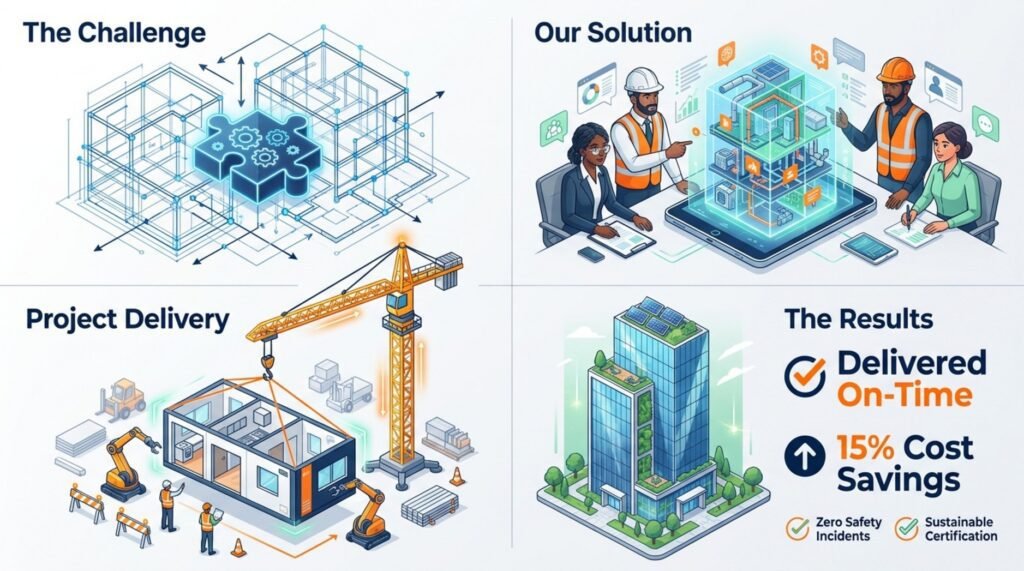
Case studies show proof. They tell the full story of past work in a way that helps a new client picture the firm working on their project.
A strong case study often includes:
| Section | What it Covers |
| Client challenge | What the client needed and what was at risk |
| Approach | Plan, methods, and key decisions |
| Delivery | How the work was managed, including safety and schedule |
| Results | Measured outcomes (time saved, cost impact, quality metrics) |
Numbers matter here. If results can be measured (weeks saved, costs reduced, fewer incidents), the story becomes stronger.
Brochures, Capability Statements, and Press Releases
Printed materials still matter in meetings, events, and introductions. Brochures and capability statements should be easy to scan and should quickly explain:
- what the firm does
- what it specializes in
- proof of experience (key projects, client types, certifications)
Press releases also shape reputation. When a firm announces a new project win, partnership, or award, the writing should do more than report facts-it should frame the news in a way that supports credibility and future growth.
Social Media, Email, and Digital Marketing Content
Construction firms also win work by staying visible over time. Social posts, newsletters, blogs, and campaign emails help keep the firm in front of buyers and influencers.
- Social media: project updates, safety moments, staff highlights, progress photos with clear context
- Email: updates, invitations, new service announcements, follow-ups after meetings
- Blogs: practical guides, answers to common client questions, explanations of processes (also helps SEO)
Well-written digital content builds familiarity and trust long before a bid is submitted.
What Makes Construction Copy Persuasive to Contract Decision Makers?
Persuasive construction writing is not about tricks. It’s about making the value clear and lowering doubt. Decision-makers often focus on risk, cost control, timelines, and reliability. Strong copy speaks to those needs and gives reassurance with facts and proof.
The best copy also predicts common objections and answers them early. It positions the firm as a steady partner, not just a contractor.
Storytelling That Highlights Results and Value
Even in technical industries, stories work. A story shows how the firm handled real pressure, solved problems, and delivered results.
For example, a case study can explain how the team handled unexpected site conditions, kept stakeholders informed, and still finished early and within budget. This makes the firm’s skills feel real, not theoretical. It also links past performance to the client’s future project.
Clarity and Conciseness in Technical Communication
Construction involves detailed work, rules, and specialized terms. Accuracy matters, but heavy jargon can lose the reader-especially if the evaluator is in finance or procurement.
Persuasive copy:
- uses plain language where possible
- explains key terms when needed
- organizes information with headings and bullet points
- keeps paragraphs short and focused
Clear writing shows professionalism and respect for the reader’s time.
Client-Focused Language and Benefits
Client-focused writing keeps returning to the client’s outcomes. It links every feature to a benefit.
Example:
- Firm-focused: “We use advanced BIM software.”
- Client-focused: “Our BIM process reduces redesigns and speeds up approvals, which helps your project stay on schedule and avoid extra cost.”
This makes the message more relevant and easier to believe.
Consistent Brand Voice and Professional Tone
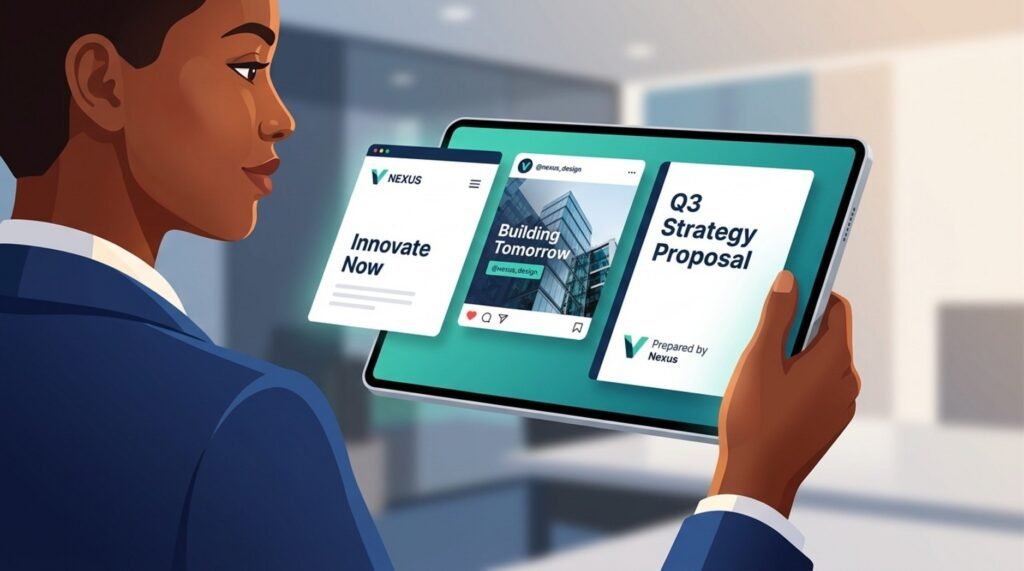
A consistent voice helps clients feel they know the firm. Proposals, web pages, and social posts should all sound like they come from the same organization.
Construction copy usually works best when it is:
- professional and confident
- clear and direct
- friendly but not casual
Consistency builds trust and makes the firm feel stable and dependable.
Use of Social Proof and Accreditations
Decision-makers trust proof from other people and trusted bodies. Strong copy uses:
- client testimonials
- awards
- certifications (ISO, LEED, safety programs)
- partnerships and associations
- stats (completion rate, safety record, on-time delivery)
These elements reduce risk in the buyer’s mind and support the firm’s claims.
How Can Construction Firms Integrate Copywriting into Their Contract-Winning Strategy?
Using copywriting well takes more than “adding nicer wording.” It works best when writing is treated as part of sales and business development. Every document and message should help persuade, explain, and build relationships.
When copywriting is planned early, written materials become sales tools, not last-minute paperwork.
Aligning Copywriting with Business Development and Sales Goals
Copywriting should support the firm’s goals. Writers need to understand:
- target markets
- ideal project types
- key differences (USPs)
- current sales challenges
That needs teamwork between marketing, sales, and project staff. If the firm wants more public-sector work, the writing may need to focus more on compliance, accountability, community outcomes, and relevant experience with government projects.
Optimizing Digital and Print Materials for Target Audiences
Different clients care about different things. A private developer, a city agency, and a homeowner will not respond to the same message.
Good copy adapts by audience:
- Digital content also needs SEO so the right people can find it.
- Print materials should work with design (headings, short sections, clear layout) so the reader can scan quickly.
The goal is simple: every piece of writing should fit the reader it is meant for.
Hiring Professional Construction Copywriters or Training Staff
Construction copywriting is a mix of technical understanding and persuasive writing. Firms often handle this by:
- hiring an in-house writer
- using a freelance writer or agency
- training current staff
If outsourcing, choose someone who knows construction or can learn technical details fast and write clearly. If training staff, focus on writing for benefits, structuring proposals, and explaining technical points in plain language. Either way, strong writing talent can directly support higher win rates.
What Are Common Mistakes in Construction Copywriting and How Can They Be Prevented?
Many firms weaken their message with avoidable writing mistakes. These issues often come from writing for internal teams instead of for the client, or from focusing too much on technical detail without explaining why it matters.
Preventing these mistakes helps every document work harder in the sales process.
Overuse of Technical Jargon or Unexplained Terms
Too much jargon pushes readers away. Not every evaluator knows acronyms or detailed construction terms.
How to prevent it:
- explain terms the first time they appear
- use plain language where possible
- connect technical methods to outcomes
Example: don’t just say “lean construction.” Explain that it reduces waste, improves workflow, and supports schedule and budget control.
Failing to Address Client Pain Points or Needs
Many firms write mostly about themselves: their history, their equipment, their services. But clients want to know how problems will be avoided and goals will be met.
How to prevent it:
- research what the client worries about (cost overruns, delays, safety, communication)
- address these points early in the copy
- show how your approach reduces risk
Lack of Clear Differentiation from Competitors
If your copy sounds like everyone else’s, you are easy to forget. Generic claims like “high quality” or “great service” don’t help.
How to prevent it:
- define real differentiators (specialty, process, safety performance, delivery approach, tech)
- be specific and back it with proof
Example: “98% on-time delivery” is stronger than “we deliver on time.”
Neglecting Calls to Action or Measurable Outcomes
If the reader doesn’t know what to do next, they may do nothing. Also, without measurable results, claims can feel empty.
How to prevent it:
- add clear CTAs (request a meeting, download a portfolio, ask for a bid)
- include numbers where possible (time saved, cost impact, safety stats, performance metrics)
How Do Construction Firms Measure the Impact of Copywriting on Winning Contracts?
Copywriting impact can feel hard to measure, but firms can track practical signs that writing is helping: more engagement, more leads, better shortlist rates, and more wins. While copy is rarely the only reason for a win, it often plays a major role in how the firm is perceived and remembered.
Tracking results helps firms improve what they publish and justify the spending.
Tracking Website Visits, Bid Engagement, and Lead Conversion Rates
Web analytics can show how well website copy is working:
- traffic growth
- time on key pages (services, case studies)
- bounce rate
- form fills and downloads
- newsletter signups
For proposals, direct tracking is harder, but firms can watch for signals like fewer clarification questions (because the bid is clearer) or more focused follow-up conversations.
Assessing Improvements in Shortlisting and Contract Wins
The clearest business measure is performance over time:
- shortlist rate
- win rate
If those numbers rise after improving proposals and marketing materials, it suggests the writing is helping. Feedback matters too-if evaluators mention clarity, structure, or professionalism, that’s strong evidence the copy is making a difference.
Calculating ROI from Copywriting Investments
To estimate ROI, compare:
- copywriting costs (staff time, freelance fees, training)
- changes in win rate and shortlist rate
- revenue from additional contracts won
Even if the sales cycle is long, firms can still connect better writing to higher bid performance and increased pipeline value. This helps show that copywriting is a growth investment, not just a marketing expense.
Conclusion
Winning more construction contracts takes more than technical skill and competitive pricing. It also takes strong communication that explains value, reduces risk, and builds trust. Copywriting helps construction firms turn technical details into clear, persuasive messages across every touchpoint-websites, proposals, case studies, and marketing content.
Looking ahead, clear writing will matter even more as projects become more complex and clients expect better communication. Firms that invest in strong copy and treat it as part of business development can win more contracts, build stronger client relationships, and grow a reputation that brings in repeat work.
Frequently Asked Questions on Construction Copywriting for Contracts
What Makes Construction Copywriting Different from Generic Copywriting?
Construction copywriting needs technical accuracy, industry knowledge, and trust-building for high-value projects. Generic copywriting often focuses on quick sales and strong emotion. Construction copy must explain complex work clearly, reduce risk concerns, and support big decisions with proof. It often involves engineering terms, regulations, project delivery methods, and different stakeholders. The goal is clear, convincing writing backed by real experience, not catchy slogans.
How Should Construction Firms Get Started with Effective Copywriting?
Start with these steps:
- Review current materials (website, brochures, recent proposals) and note where the writing is unclear or too generic.
- Define your key differences and who you want to win work from.
- Decide whether to hire a specialist writer, outsource, or train your team.
- Improve the most important pieces first (homepage, service pages, proposal executive summary), then expand across other content.
How Important Are Case Studies and Testimonials in Bid Documents?
They are often central to a strong bid. Case studies show what the firm has already done, using real examples and results. Testimonials add third-party support that builds trust fast. Together, they turn claims into proof and help decision-makers feel safer choosing the firm.
Can Construction Firms Outsource Copywriting Effectively?
Yes. Outsourcing can be a smart option because it gives access to experienced writers without hiring full-time staff. The key is choosing someone who understands construction (or can learn it quickly), and giving them what they need: clear briefs, examples, and access to people in the firm who can answer technical questions. With good collaboration, outsourced copy can be accurate, persuasive, and consistent with the firm’s brand.

- The AI Training Roadmap Guide: 9 Providers Ranked for Enterprise Upskilling - September 10, 2026
- How Construction Firms Use Copywriting to Win More Contracts - June 11, 2026
- Cardio vs Strength: Advice from a Personal Trainer Orlando - May 12, 2026